Home improvement marketing advice usually hands you a list. The trouble is that the channel that fills a schedule at $400,000 a year is the wrong first move at $3 million, and most lists are written as if company size didn’t matter. Here is the order in one sentence: keep the free channels that need nobody to run them until someone besides you can answer the phone, add a website and paid search when that person arrives, add demand creation such as Meta ads, Local Services Ads and direct mail once capture is built, and hand partnerships and video to staff once you have them. If you’re asking what marketing a contractor should do first, that sentence is the answer.
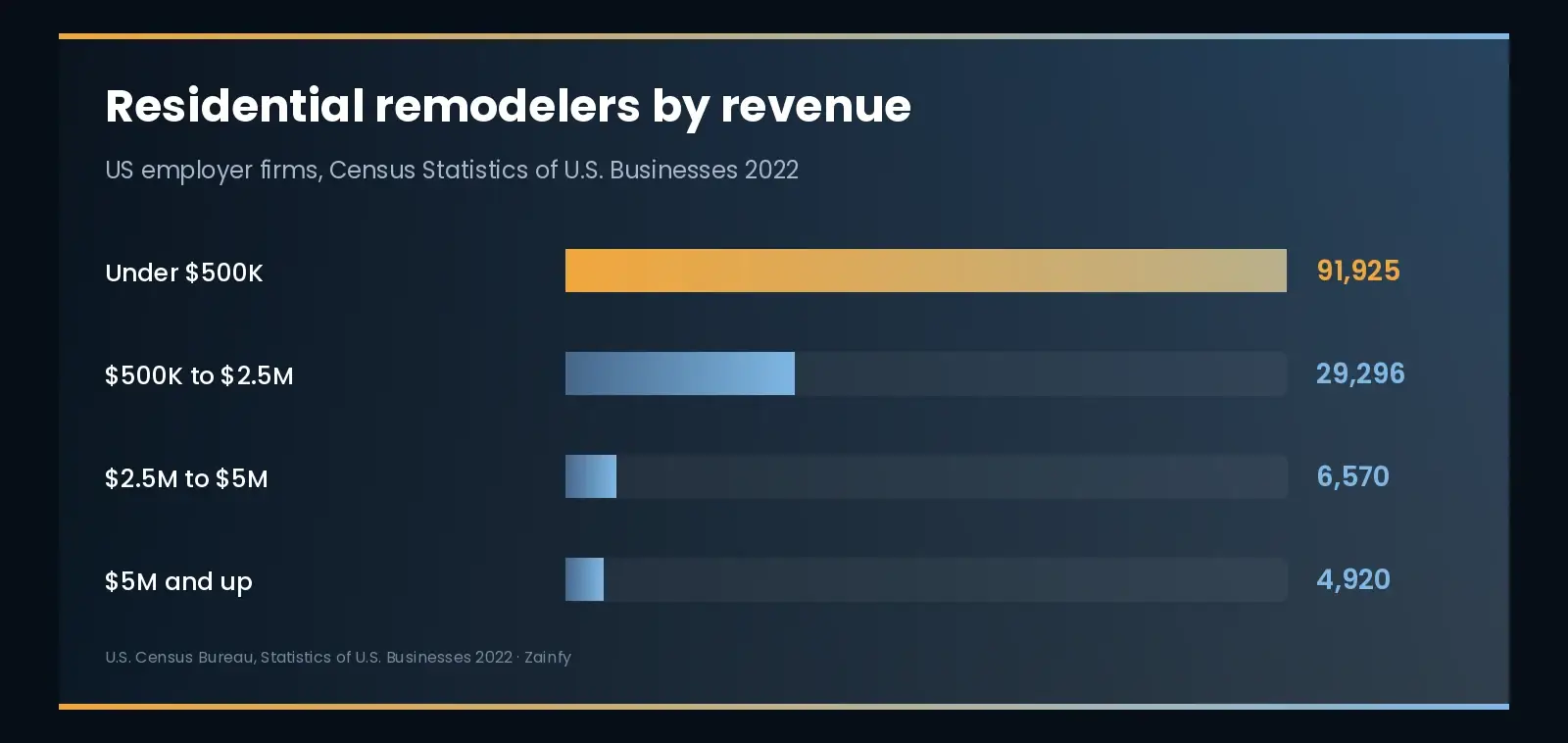
The size bands come from the U.S. Census Bureau’s >Statistics of U.S. Businesses for residential remodelers, 2022 data, which is the most recent business-size release. They count employer firms only, and they describe how the industry is built. They say nothing about how much demand there is.
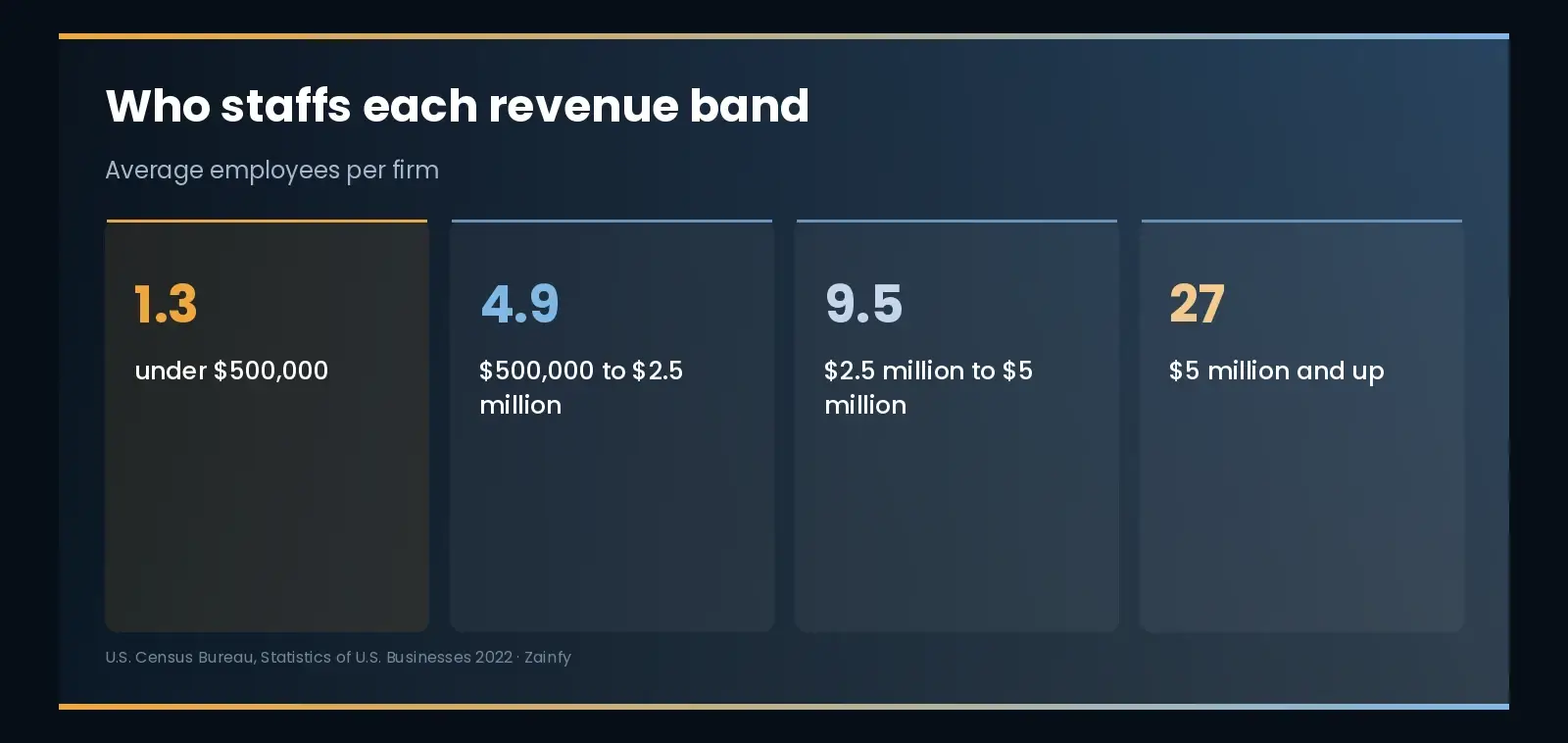
Under $500,000: 91,925 firms, 69.3% of the industry, averaging 1.3 employees.
$500,000 to $2.5 million: 29,296 firms, averaging 4.9 employees.
$2.5 million to $5 million: 6,570 firms, averaging 9.5 employees.
Above $5 million: 4,920 firms, averaging 27 employees.
Employees per firm matters more than revenue for one reason: every channel needs somebody to answer what it brings in. A home remodeling marketing strategy that ignores headcount buys leads nobody calls back. Referrals are where almost every one of these firms starts, so treat them as the baseline you build on rather than a channel you add. Everything below is about what goes on top of them, and when.
Why the order of your home improvement marketing matters more than the list
Most marketing for home improvement companies, and most marketing for remodeling contractors, blurs two different decisions: picking a channel and timing it. Picking is easy, whether you call it home renovation marketing, digital marketing for home improvement companies or plain advertising. Every ranking list agrees that a Business Profile, reviews, a website, paid search and social all work for somebody. Timing is where owners lose money, because a channel bought too early doesn’t just underperform. It gets paid for out of the thin slice that also pays you.
The National Association of Home Builders’ >Remodelers’ Cost of Doing Business Study (2026 edition, fiscal 2024 data) shows how thin. Everything that isn’t jobsite cost, meaning the office, finance, all of your marketing, admin and the owner’s own pay, comes out of 23.6% of revenue. Net profit after all of it averaged 6.3%. That 23.6% is a ceiling, and a channel bought out of order competes with your paycheck for it. So how much should a remodeling contractor spend on marketing? No credible public source publishes a percentage for this trade, and NAHB keeps its sales and marketing line inside the paid study. The honest answer is the ceiling itself: whatever you spend comes out of that 23.6%.
The second reason is lag. Some channels bill you and land work within a week. Others bill for months before they land anything, and a small shop can’t carry that gap. The order below puts the short-lag channels where cash is tightest and saves the long-lag ones for the bands that can wait.
None of this helps an owner with a hole in next month’s schedule. That owner’s question is speed, and the fastest route back to a ringing phone is a different sort of these channels.
Under $500,000: what to add first when nothing can need feeding
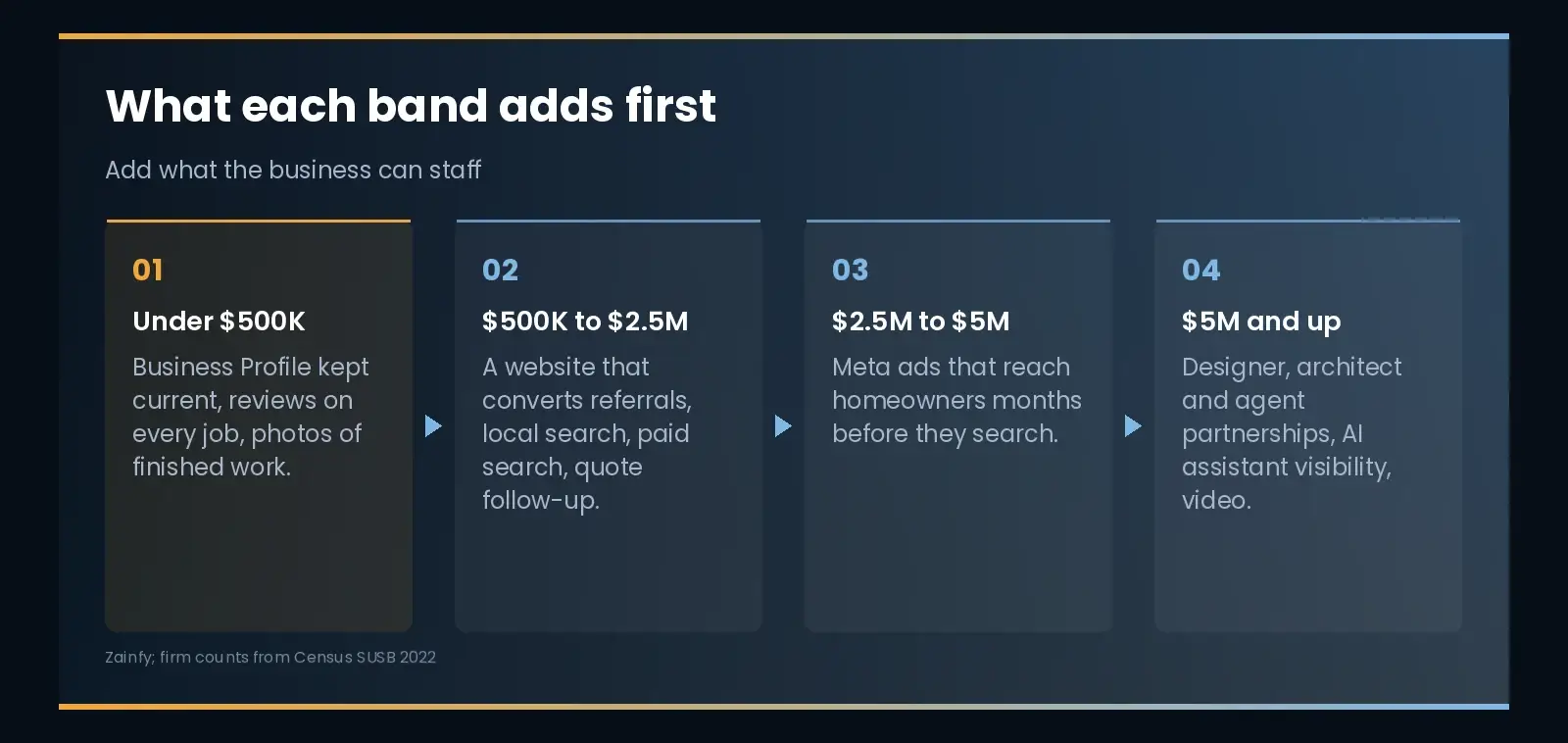
This is the biggest band, and nearly every marketing article is written for it without saying so. Seven in ten remodeling employer firms bill under $500,000 a year, with an average of 1.3 employees. That’s an owner and roughly one other person, which means the business can staff a job but not a channel. Everything added here has to survive an owner who’s on site until four, which is why these are the most practical marketing strategies for small construction companies: none of them needs a hire.
Add: a Google Business Profile kept current, with real hours, service area and project photos. Reviews requested on every finished job, in person, before the final walkthrough ends. Before-and-after photographs of work you’ve already done, shot from a matching angle. Lettering on the truck and a sign in every yard you’re working in. And narrowing the work you take, which is the one real competitive edge at this size. Large, systematized competitors tend to avoid small permitted jobs, change-order-heavy work and long multi-stage remodels. A narrow shop wins where they won’t go, and a narrow shop’s reviews and photos all point at one kind of job, which makes the Business Profile work harder.
Drop: anything that bills monthly before it produces anything. That includes the pay-per-lead marketplaces a one-and-a-half-person shop is most often sold. Whatever the platform, a monthly bill with no promised return lands on a business with no one free to work the leads it sends. Pinterest boards and daily social posting belong in this column too. They cost hours this band doesn’t have.
$500,000 to $2.5 million: the first hire, and the first thing you can afford to buy
29,296 firms, averaging 4.9 employees. This is the band where someone other than the owner can answer a phone at 4 p.m., and that’s what makes bought demand survivable for the first time.
Add a website that converts the referrals already arriving. Most referred homeowners look you up before they call. If the site doesn’t show the work and make the next step obvious, you’re losing your warmest leads. The minimum is recent project photos, the towns you serve, a phone number that’s answered, and a short form that asks for the job type and timing.
Add local search presence. Being found for your trade and town is now worth the time, because someone can handle what it brings in.
Add paid search. Homeowners searching right now are the strongest intent you can buy, and this is the first band with the margin and the staff to answer them quickly. Start with the one job type you most want more of, in the towns you already serve, and widen only after that campaign books work.
Add follow-up on outstanding quotes. Email or text, a few touches after every estimate. It’s the cheapest win in the band.
Add a call through your old lead list. People who asked for a quote and didn’t book are worth one more conversation.
Drop: the free-but-slow channels from the first band that now cost the hours you need for estimating. This is your first real reallocation decision. The question is when to move the money, and the answer is when an hour of your time spent estimating is worth more than an hour spent posting.
$2.5 million to $5 million: when to start buying attention before anyone is searching
6,570 firms, averaging 9.5 employees. Here the constraint flips. You’ve already built the channels that capture people who are searching, so new money moves to creating demand among homeowners who haven’t started yet.
The decision runs in this order. First, Meta ads on Facebook and Instagram, which reach homeowners months before they search and suit the longer planning cycles of bigger jobs. Run them on the project types that pay best, using real photos from your own jobs. Second, Google’s Local Services Ads, if your trade has a category, as one more way to show up at the top of Google. Budget for the screening wait, which Google puts at three to four weeks on average. Third, direct mail into the neighborhoods around your last jobs, where the houses are a similar age and the owners have just watched your truck for six weeks.
Drop: the channel that got you here if it now caps you. For many firms at this size that’s the owner personally handling every lead source. The honest reason to change is attention: one person can only run so many sources well. This is also the band where many owners ask when a remodeling contractor should hire a marketing agency. The usual answer is when the channels outnumber the people who can run them, and outside help costs less than a new salary.
Two shops at equal revenue can still need different channels inside this band. One averaging $9,000 bathroom updates and one doing $60,000 primary suites face different math on every option here. Picking within the band by ticket size is a separate question, and it’s worked through for bath remodelers deciding by job value.
Above $5 million: the channels that need someone to run them
4,920 firms, 3.7% of the industry, averaging 27 employees. This is the shortest section on purpose, because most readers aren’t here yet.
What changes at this size is who runs the marketing. Strategic partnerships with interior designers, architects and real estate agents start to lead, because one referral relationship can send a year of large projects. Being findable inside AI assistants like ChatGPT and Perplexity starts to matter as homeowners begin their research there. That depends on the groundwork search needs: consistent business details everywhere you’re listed, reviews that name the work, and project pages that answer real homeowner questions. Video becomes worth producing, since there’s finally someone to produce it.
At 27 employees, an owner staffs these channels instead of running them, and that shift, more than the revenue figure, is the real threshold. If you can’t name the person who would own a partnership program or a video schedule, you’re not in this band yet, whatever the revenue says.
For perspective, the >Qualified Remodeler Top 500, a ranking of the largest firms that choose to report, put its No. 500 firm at just over $3.1 million in 2025 revenue.
Don’t buy a channel to fix a conversion problem
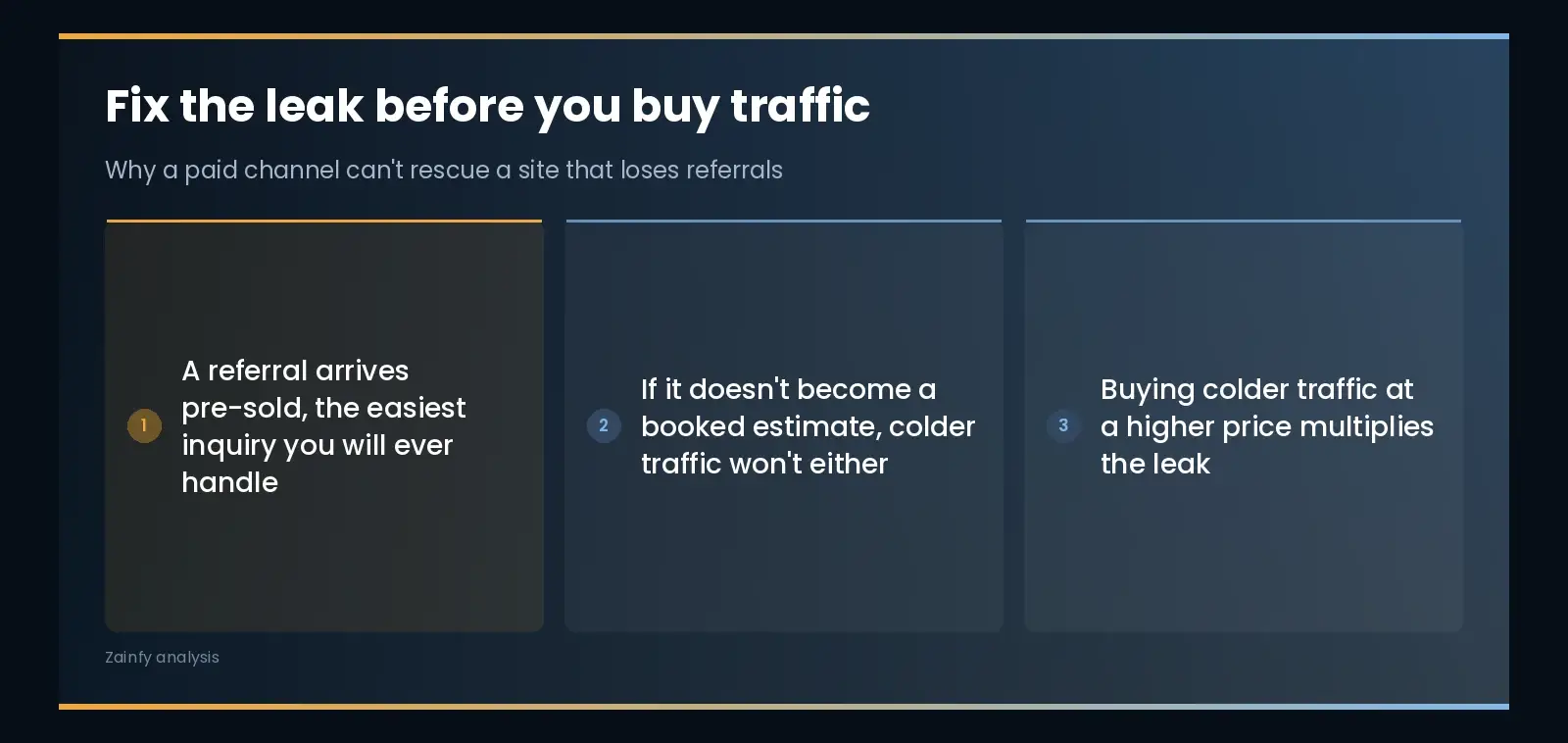
Don’t add a paid channel before your website converts the referrals you already get.
A referral arrives pre-sold. They know someone who hired you, and they’re the easiest inquiry you’ll ever handle. If that one doesn’t turn into a booked estimate, buying colder traffic at a higher price won’t fix it. It multiplies the leak.
The demand is there. In Houzz’s >2026 Renovation Plans Report, 93% of homeowners planning a renovation said they intend to hire a professional. In the bottom two bands, people are looking. The constraint is what happens after they find you.
Here’s a quick test. Count your last ten referrals and how many booked an estimate. If fewer than you’d expect from people who were told to call you, fix the site, the phone answering and the follow-up first. Every new channel you buy will run through those gaps.
Which marketing channel should a remodeling contractor start with?
A remodeling contractor should start with the marketing channels that need nobody to run them: a current Google Business Profile, reviews requested on every finished job, and photographs of completed work. Census data shows 69% of US remodeling employer firms bill under $500,000 with about one employee, so most can’t staff anything more yet.
Paid channels come after a website converts the referrals already arriving. From there, the order follows staff more than revenue: paid search when someone can answer the phone, demand creation once capture is built, partnerships and video once people run them. The usual list of home improvement marketing ideas has the right channels in the wrong order, and putting them in order is how to grow a remodeling business without wasting the margin.
That’s how to market a remodeling business at any size: match the channel to the people you have. Write last year’s revenue at the top of a page and every marketing line you currently pay for underneath it. Strike out each one that belongs to a band you’re not in, both the ones above you and the ones you’ve outgrown. What’s left is this quarter’s marketing, and it’ll be shorter than the list you’re paying for now.
Figures checked against the linked Census, NAHB, Qualified Remodeler and Houzz sources on November 10, 2026.