Two businesses sell under “bathroom remodel.” One installs a defined product: a walk-in tub, a shower system, a tub-to-shower conversion. The other takes apart a room and rebuilds it around plumbing, flooring, fixtures, storage, light, and the way a household uses the space.
Current lead listings separate those jobs because the contractor receiving the inquiry needs to know which operation can fulfill it. A Lansing remodeler should make the distinction just as early. The homeowner has already seen months of short-installation advertising. If your material says only “bathroom remodeling,” that advertising supplies the meaning.
You may sell both kinds of work. That is not the problem. The problem is asking one phrase to explain two businesses with different crews, decisions, disruption, and sales conversations. Before judging whether your marketing attracts enough attention, find out which bathroom business a stranger thinks he has found.
Seventy-six thousand houses, and one loose term
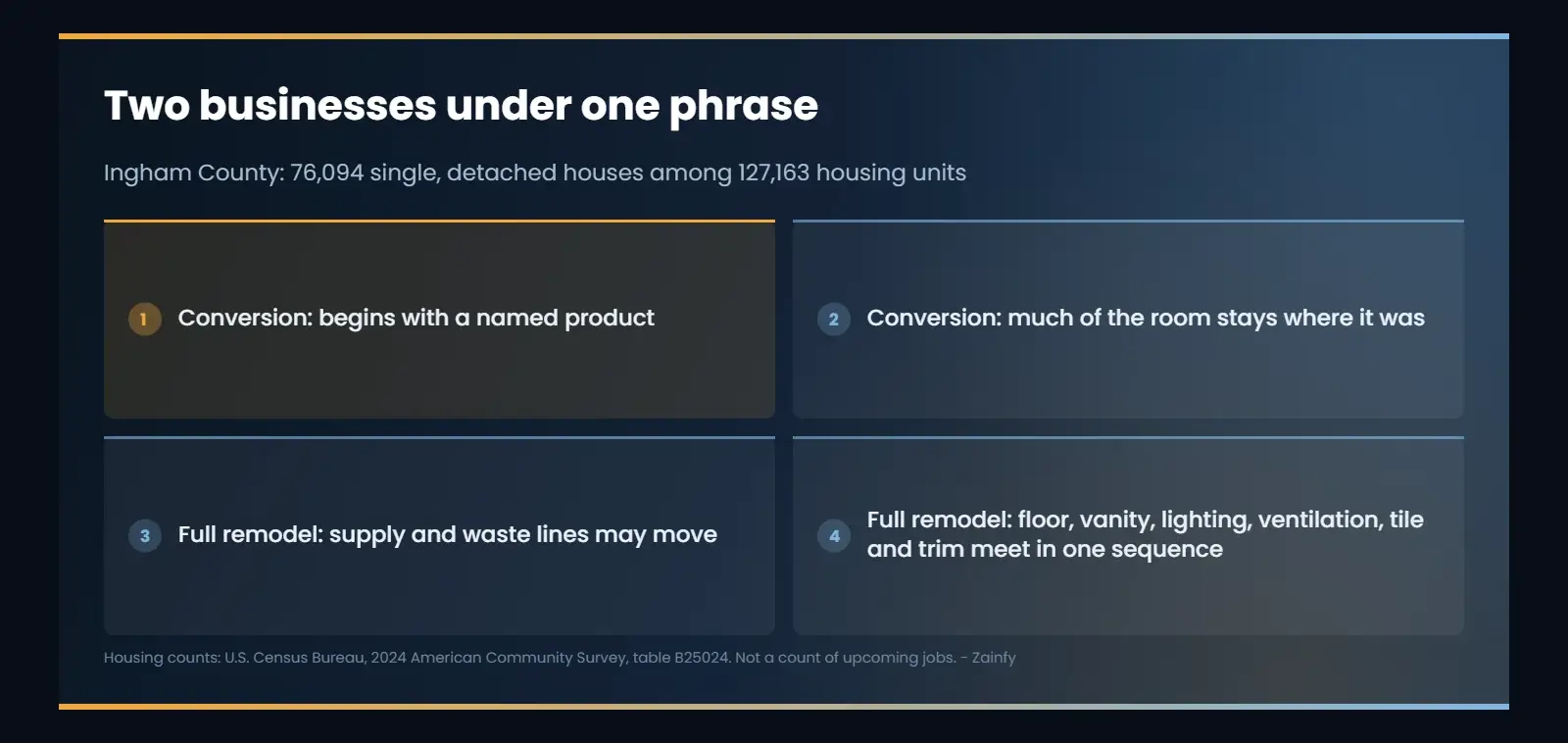
Ingham County has 127,163 housing units. The 2024 American Community Survey table B25024 counts 76,094 of them as single, detached houses.
That is the physical territory in which a Lansing contractor may replace one bathroom product or reconstruct the whole room. It is not a count of upcoming jobs, and it proves nothing about the meaning of a search. The listings do that work. The county figure establishes what the loose term is being asked to cover.
A conversion can begin with a named product. The old tub comes out; a shower base, wall system, or walk-in tub goes in. Much of the room stays where it was. A full remodel can take the space back to its structure. Supply and waste lines may move. The floor, vanity, lighting, ventilation, tile, and trim must meet inside one sequence. The household may lose the room for two or three weeks.
Both are real remodeling work. They are not interchangeable purchases. One buyer can begin by choosing a product. The other must make connected decisions across an entire room, including conditions nobody sees until demolition.
Put both under one label and the louder category wins. The homeowner arrives expecting the job most familiar from advertising, not the one your crew actually performs. The misunderstanding begins before the call because the category was left unnamed.
The guides blur what sellers have to separate
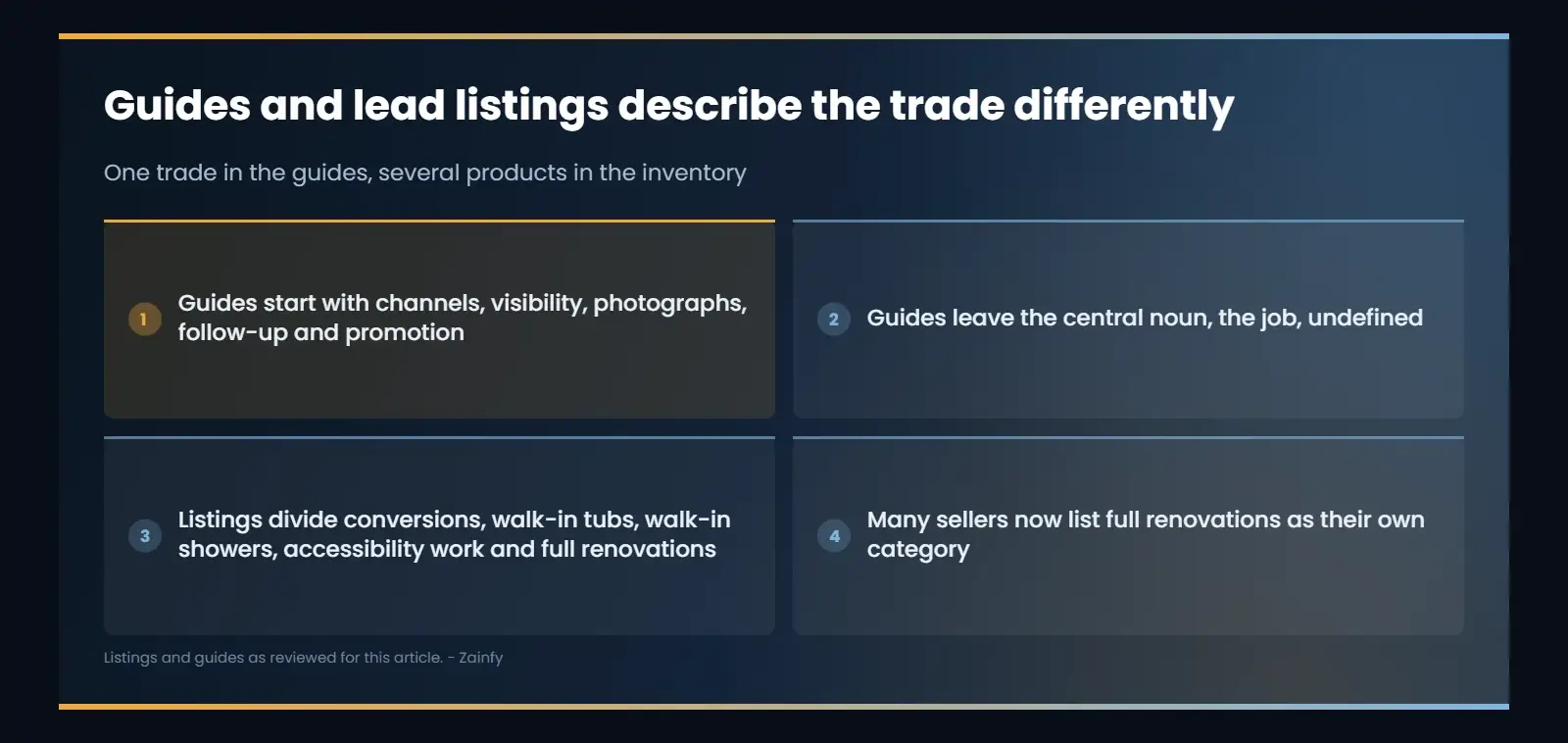
Pages about bathroom remodeling marketing usually begin with channels, visibility, photographs, follow-up, and promotion. The advice can be sensible and still leave the central noun undefined. “Homeowners interested in renovation” identifies a person. It does not identify the job.
Lead sellers cannot remain that broad. Current listings divide tub-to-shower conversions, walk-in tubs, walk-in showers, accessibility work, and full renovations. Some distinguish a complete gut remodel from a shower-only project. The person buying or supplying the inquiry needs that split before anybody picks up the phone.
This is the useful disagreement between the two result sets. Editorial advice treats bathroom remodeling as one trade. Commercial inventory treats it as several products. The second description is closer to the contractor’s operating reality because the wrong crew, scope, or sales conversation cannot be hidden inside a broad category.
The market has changed enough that a contractor should not claim every purchased bathroom inquiry is for a conversion. Many sellers now include full renovations. That correction sharpens the argument rather than weakening it. If the seller must name the project type, your own marketing cannot responsibly stop at “bathroom remodel.”
The question is not whether the inquiry came from a respectable source. It is whether the homeowner and contractor entered the conversation using one definition of the work.
Read the product line, not the price
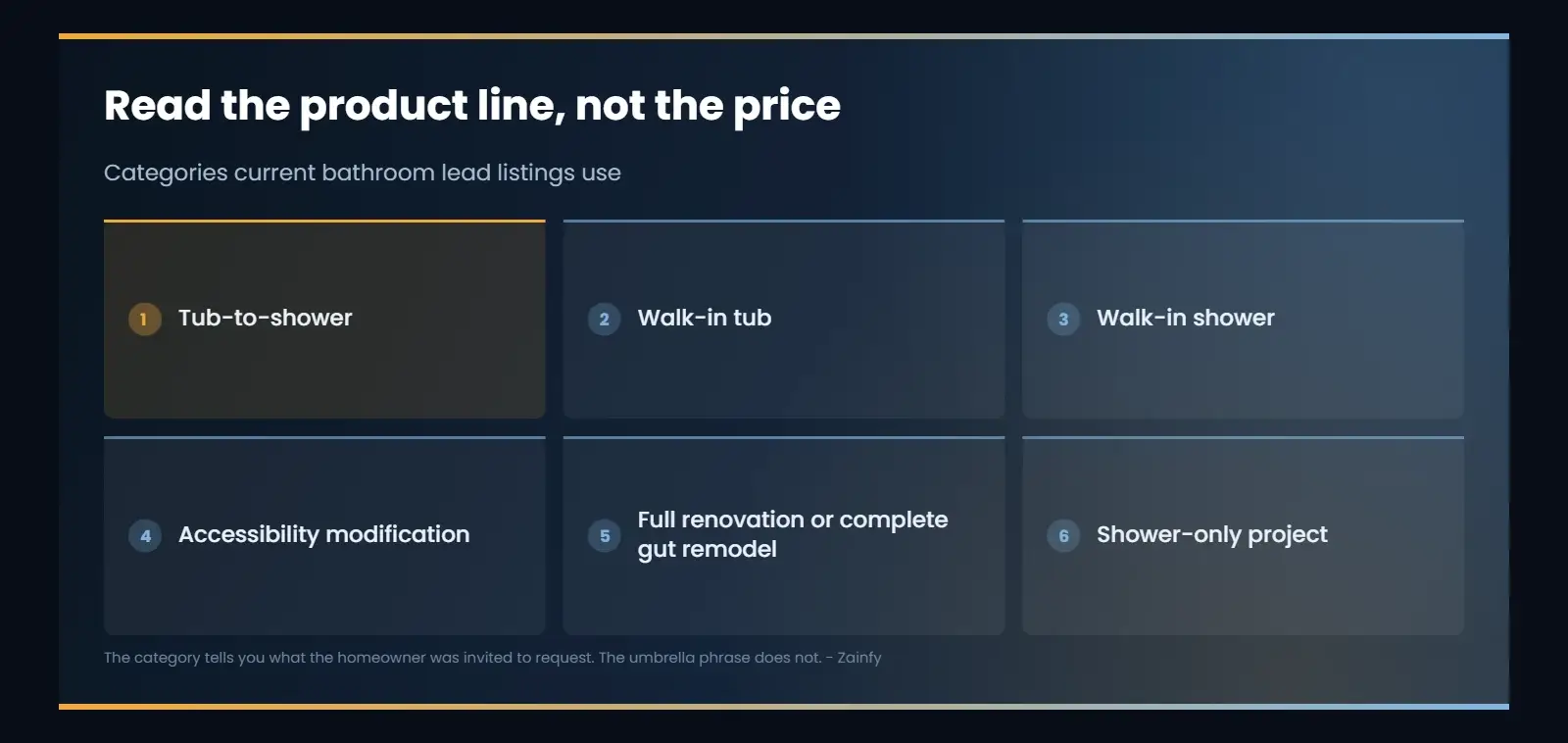
Search for bathroom remodeling leads and ignore every number attached to the offer. Read the product line.
Tub-to-shower. Walk-in tub. Walk-in shower. Accessibility modification. Full renovation. Complete gut remodel. Shower-only project.
Those labels are the market admitting that “bathroom remodeling” is too broad to route the work. They tell the seller which buyer was attracted and tell the contractor which operation is expected. No arithmetic improves that evidence. The inventory has already named its categories.
Now put your own operation beside them. If your crew removes the room, relocates plumbing, coordinates trades, and rebuilds the space around a household’s particular needs, “full renovation” is not a larger version of a conversion. It is a different sequence with a different burden of explanation. If you also install conversion products, those jobs still deserve their own description.
A broad inquiry can become useful after the project type is known. Before that, it is only a person interested in a room called a bathroom. Read the selected product before judging the opportunity. The category tells you what the homeowner was invited to request; the umbrella phrase does not.
Read your material as the buyer reads it
Open the page a homeowner reaches after seeing your bathroom work. Open your recent project posts and the form used to make contact. Do not supply facts from memory. Read only what is on the screen.
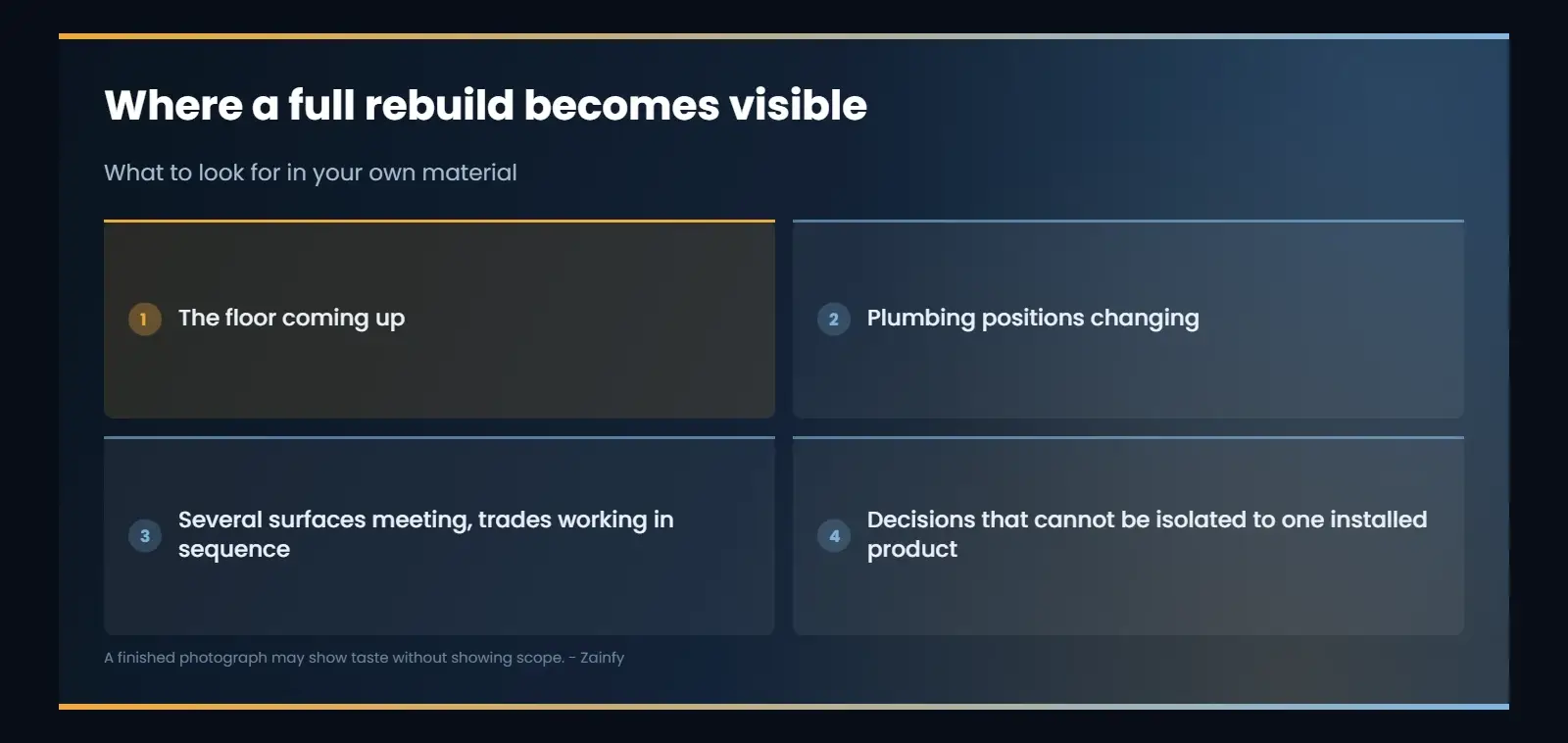
Where does the work become a complete-room rebuild? A polished finished photograph may show taste without showing scope. Look for the floor coming up, plumbing positions changing, several surfaces meeting, trades working in sequence, and decisions that cannot be isolated to one installed product.
Now remove your professional assumptions. The reader does not know that a moved drain implies demolition, inspection, repair, and a different schedule. He sees the room after the work. If the material never explains what changed beneath that finish, a conversion and a reconstruction can look like two versions of one purchase.
Listen to the questions that reach the first conversation. A homeowner expecting a standardized installation is not failing a hidden qualification test. He is using the category available to him. If your work requires a three-week sequence and the material never says so, his expectation is a rational reading of what he found.
The correction is not more promotional language. Name the job. Explain which parts move together. Show why the room cannot be reduced to one product. Make the work recognizable before asking anyone to value it.
Don’t publish another comparison attack
Do not build your bathroom marketing around attacking the one-day category.
Search for the comparison. Full-service remodelers have already written it, often beside the installers’ own rebuttal pages. You enter a crowded argument about another company’s product and allow its advertising to choose the subject.
The approach also postpones the explanation your buyer needs. Paragraphs about what a conversion does not include are still paragraphs that do not describe how you rebuild a room. The other business remains at the center; your work appears as the response.
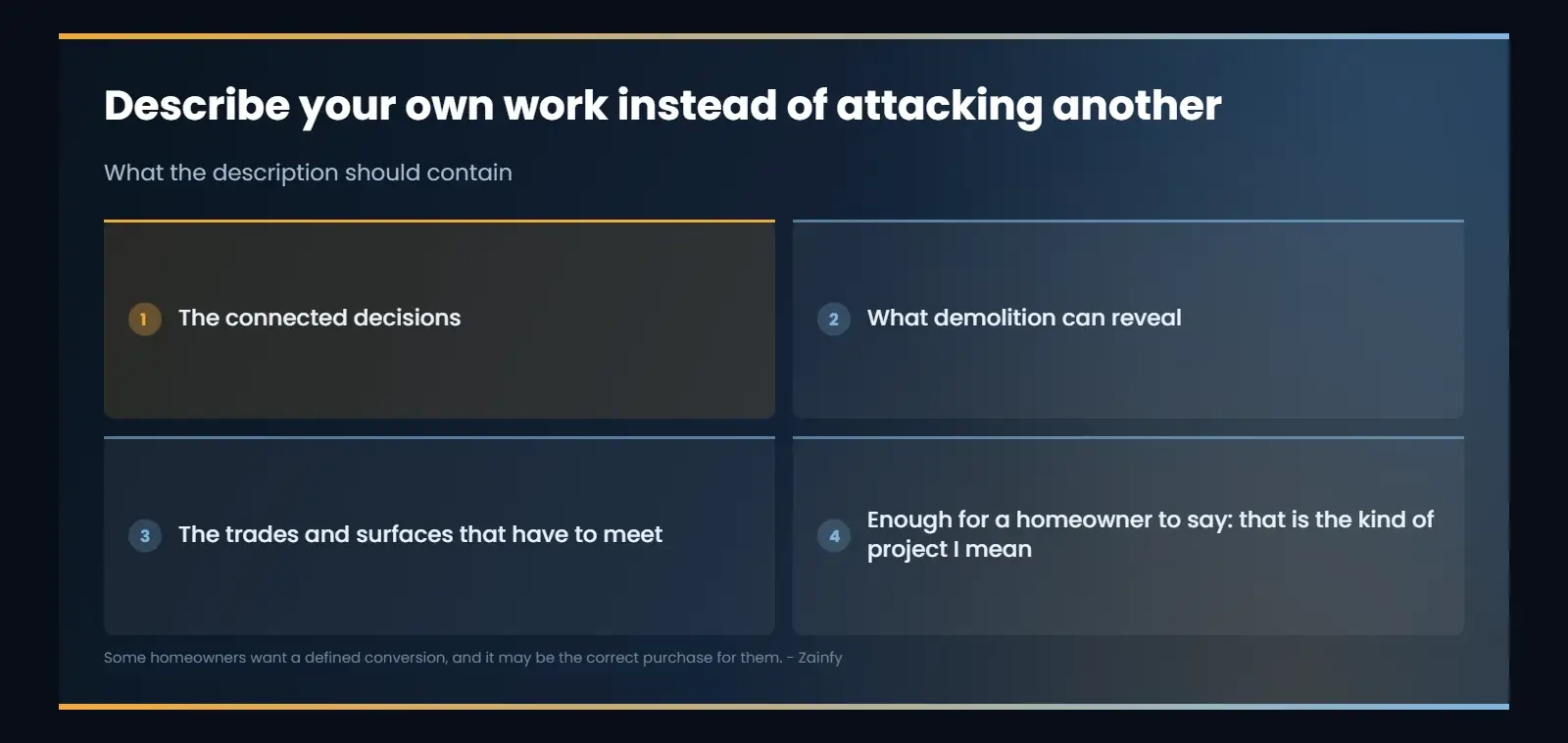
Some homeowners want a defined conversion. It may be the correct purchase for their bathroom, mobility, schedule, or tolerance for disruption. You do not need to make that buyer wrong to identify the buyer who wants a reconstructed room.
Describe your work until the comparison becomes unnecessary. Show the connected decisions. Explain what demolition can reveal. Name the trades and surfaces that have to meet. Give the homeowner enough information to say, “That is the kind of project I mean.” Clarity about your own operation is a stronger position than criticism of an operation you do not run.
The distinction must survive first contact
Wherever a Lansing homeowner encounters the company, the two businesses must separate before he has to ask. He arrives with a frame supplied by the last bathroom offer he saw. Ambiguous work is sorted into the simpler category because that category already has a product name and a familiar promise. Craftsmanship cannot correct the misunderstanding if the buyer has not yet discovered what kind of work you perform. This is where the argument stops short of prescribing a page or campaign. For Lansing remodelers doing the whole bathroom, the essential handoff is an accurate account of the job: a connected room, a coordinated sequence, and decisions extending beyond one installed product. The first encounter does not need to explain every fixture or finish. It must identify the business well enough that a homeowner seeking a full rebuild recognizes it, while a homeowner seeking one product does not enter under a false expectation. When that distinction survives first contact, the conversation can begin with the room rather than with a correction.
Are tub-to-shower conversions and full bathroom remodels one business or two?
They are two businesses sharing one broad trade label. A conversion installs a defined product. A full remodel reconstructs a connected room, may move plumbing, and coordinates several trades across a longer sequence.
Current lead listings make the distinction visible. They separate tub-to-shower, walk-in tub, walk-in shower, accessibility, shower-only, and full-renovation categories. Sellers need those labels because a contractor cannot fulfill every category with an identical crew or process.
Ingham County’s 76,094 single, detached houses contain bathrooms needing work at many levels. The Census count cannot predict which owner wants which project. It shows why one broad word is being asked to carry a large residential territory and several different purchases.
The practical split is not good work against bad work. It is product installation against room reconstruction. A contractor may offer both, but each needs its own plain description. If the marketing leaves the category open, the buyer brings the definition learned elsewhere. Name the business before the shared label names it for you.
That definition should survive beyond an advertisement. It should remain clear in project descriptions, photographs, inquiry language, and the conversation that follows. Repetition here is not promotional excess. It prevents the homeowner from reaching the estimate with a category assumption the contractor never intended to create.
What Lansing remodelers ask about bathroom marketing
[wps_faq style=”classic” question=”What job is a purchased bathroom remodeling lead usually for?”]
It may be for a conversion or a full renovation, so the listed project type matters more than the broad label. Current sellers separate tub-to-shower conversions, walk-in tubs, walk-in showers, accessibility work, shower-only projects, and complete renovations. That selection tells you what the homeowner was invited to request before the inquiry reached a contractor. A remodeler can perform several categories and still need different crews, questions, and schedules for each. Read the named product before reading “bathroom remodeling” as a complete description. Without that detail, the most basic fact about the opportunity remains unknown.
[/wps_faq]
[wps_faq style=”classic” question=”Does a full-bathroom remodeler need to spell out the difference?”]
Yes. Repeated shower-system advertising has already given many homeowners a narrower picture of bathroom remodeling. A finished photograph does not necessarily reveal whether one product was installed or the room was rebuilt around plumbing, flooring, fixtures, storage, and several trades. Read your material without adding what you know from the job. If the connected scope and multi-week sequence never become visible, the reader has no reason to infer them. Do not solve that gap with an attack on conversions. Put your own work at the center and make the reconstruction recognizable before the homeowner calls.
[/wps_faq]
[wps_faq style=”classic” question=”How large is the relevant housing pool in Ingham County?”]
Ingham County has 127,163 housing units, including 76,094 single, detached houses, according to the 2024 American Community Survey table B25024. The figures set the physical scale for Lansing-area residential work; they do not count future projects or interested owners. Inside that pool, a bathroom request can mean one replacement product or a room rebuilt as a connected system. The local number matters because it grounds the distinction in real houses without pretending to measure demand. Marketing earns its place by identifying the job clearly, not by turning a housing count into a promise.
[/wps_faq]
Put the two searches beside each other
Open two tabs tonight. In one, read the project categories listed by bathroom lead sellers. Ignore the prices. In the other, open the material a homeowner sees from your company.
Ask which category a stranger would assign you to without calling. If the honest answer is “unclear,” that is the week’s job. State what changes in a full rebuild, which decisions belong together, and why the work differs from installing one defined product.
Do not add a comparison attack or an outcome claim. Give the buyer enough information to place your company in the correct business before the first conversation. The shared phrase will remain broad. Your description does not have to.