Author: Zayn Shah
If island clients keep choosing another Savannah contractor, your website may be telling them you do not understand coastal work within the first 30 seconds. A generic template cannot establish that you know Tybee, Wilmington Island, Whitemarsh, Skidaway Island, or the floodplain rules that change across Chatham County.
The fix is not another beach photo. It is specific proof: named island projects, correct jurisdiction language, visible credentials, and a lead path that works from a phone. That gap is exactly what Zainfy’s website design work for Savannah remodelers is built to close.
These five signs show where a coastal prospect stops trusting the site.
1. Your site never mentions flood rules, and she noticed
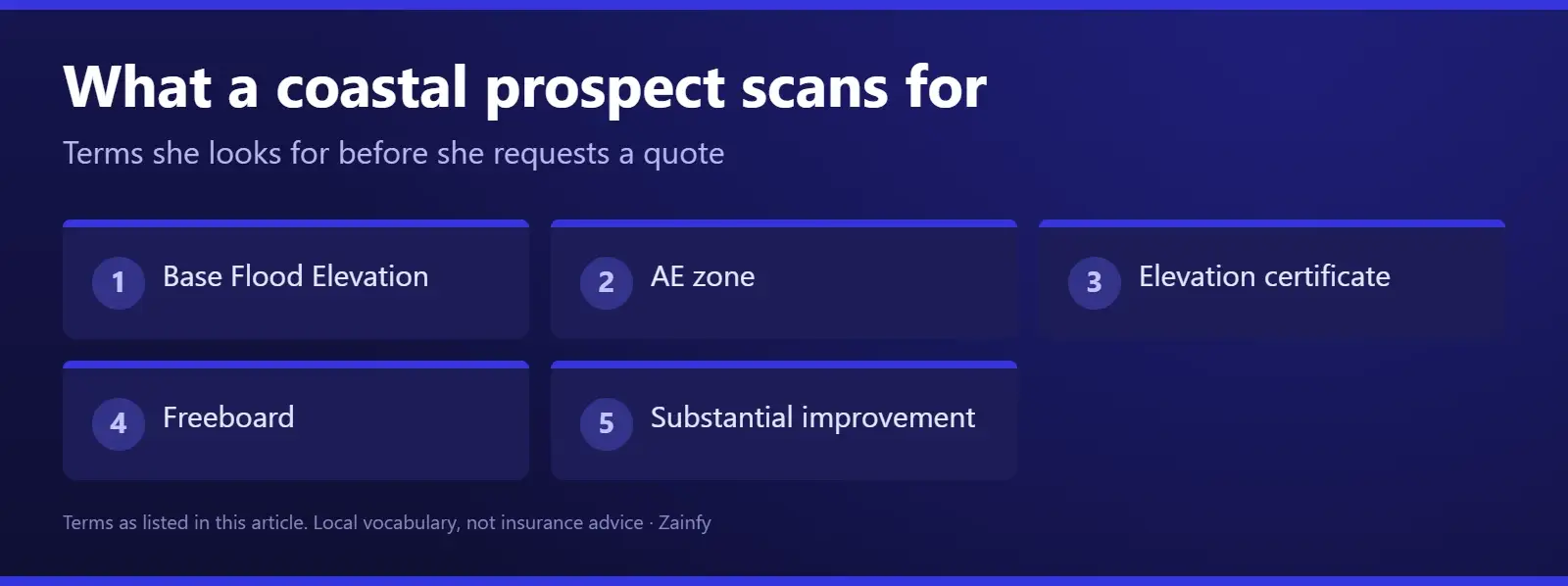
A coastal prospect scans for terms that affect the project before requesting a quote: Base Flood Elevation, AE zone, elevation certificate, freeboard, and substantial improvement.
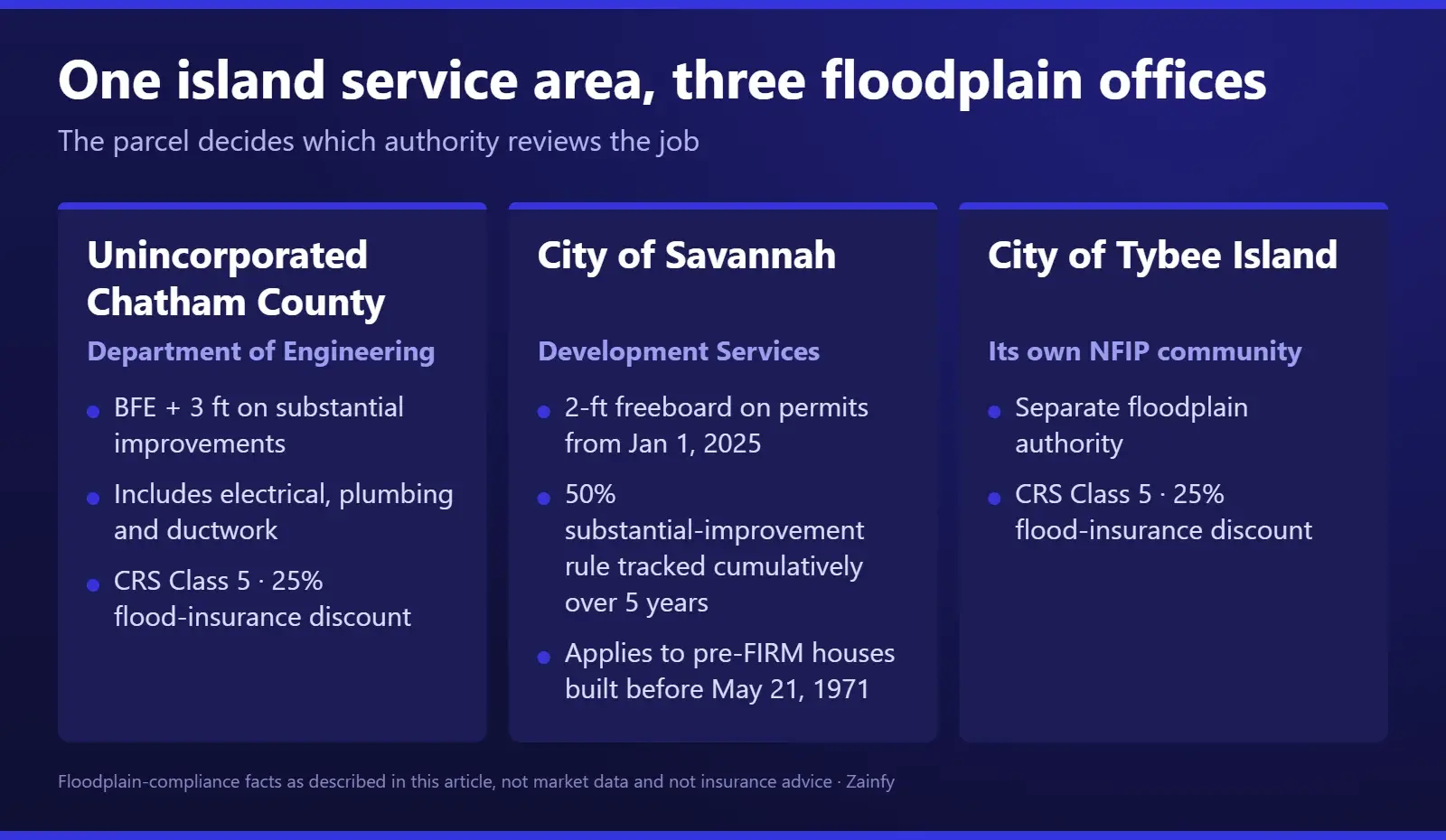
The rules are not interchangeable. Unincorporated Chatham County requires substantial improvements to reach at least BFE plus three feet, including electrical, plumbing, and ductwork. City of Savannah permits submitted from January 1, 2025 use a two-foot freeboard requirement. For pre-FIRM houses built before May 21, 1971, Savannah tracks renovation costs cumulatively over five years when applying the 50% substantial-improvement rule.
Tybee Island and unincorporated Chatham County are both CRS Class 5 communities, tied to a 25% flood-insurance discount. That is not insurance advice. It is local vocabulary a competent coastal contractor should recognize.
If none of this appears anywhere, the prospect has to discover your floodplain experience during the call. A better site answers the competence question first.
2. The gallery could be anywhere but the coast
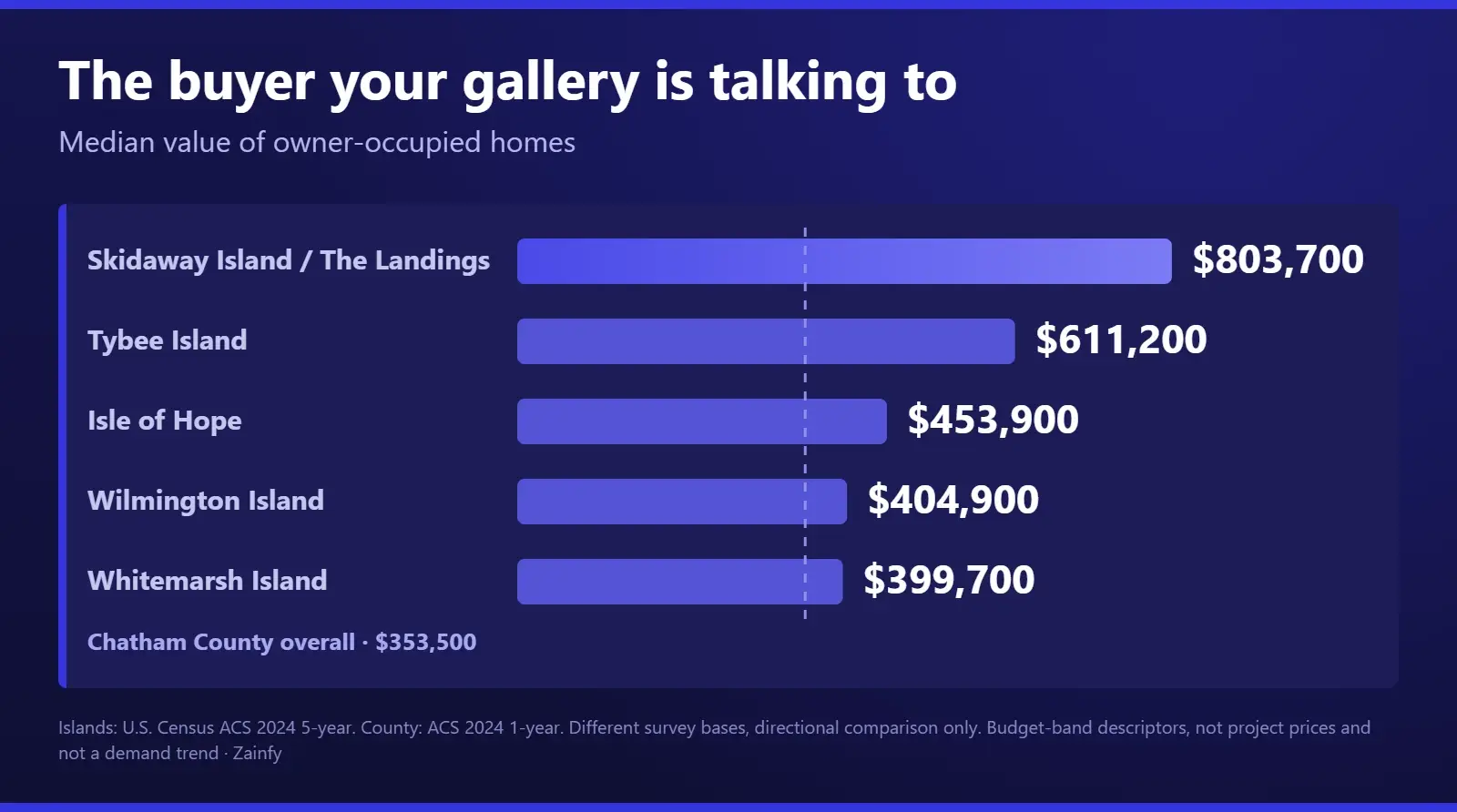
Your portfolio shows finished kitchens, but none has a marsh view, raised foundation, island caption, or coastal exterior. To a Landings prospect, those rooms could be in any Georgia suburb. Skidaway Island’s median owner-occupied home value was $803,700 in the ACS 2024 five-year data. Tybee Island’s was $611,200. Those figures describe the buyer’s budget band, not project prices or demand. The client filtering contractors in that band expects proof from comparable places. Caption the real project: a Tybee re-side, a Wilmington Island addition, a Landings kitchen. Show the before-and-after and the coastal constraint the crew handled. Stock photography communicates no local track record, while a “latest project” from three years ago makes the company look inactive. Real, current, island-named work is the trust filter. If the gallery cannot place a single project on the coast, the buyer has no reason to assume you work there.
3. The remote buyer gave you 30 seconds on a phone
Chatham County ACS 2024 data shows 14.2% of residents moved in the previous year, including moves within the county. The figure does not measure arrivals from other states, but it does show how much of the market is changing address. A relocating or second-home buyer may evaluate the company entirely from a phone. That buyer is the reason remodeler sites across Georgia are built mobile-first.
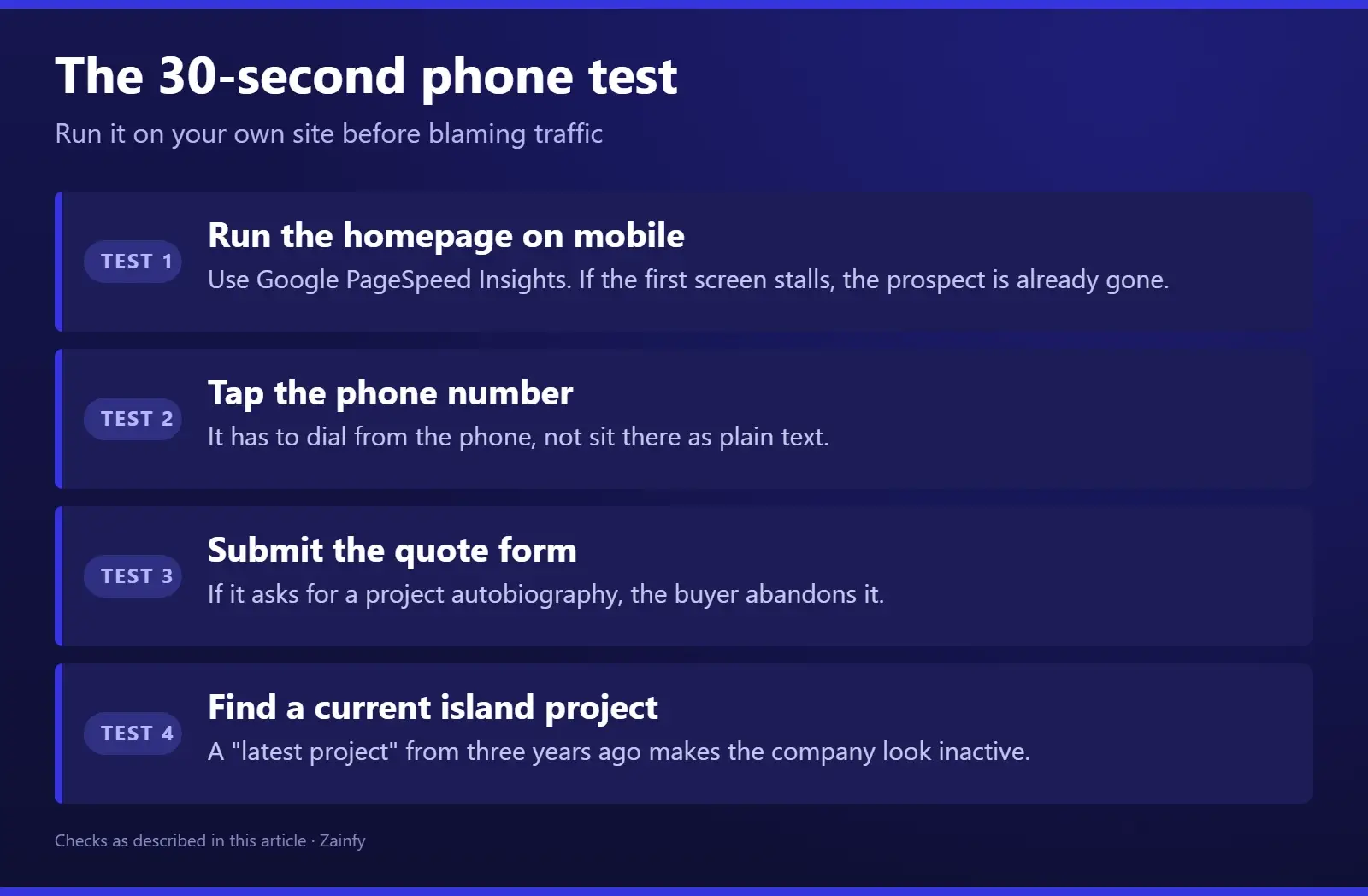
Three seconds is enough to expose a weak site. If the first screen stalls, the phone number cannot be tapped, or the quote form asks for a project autobiography, the prospect leaves. Thin reviews create another gap because the buyer will cross-check the company on its Google Business Profile, Maps, and Houzz.
Run the homepage through Google’s PageSpeed Insights on mobile. Then tap the number, submit the form, and find a current island project. If those actions are not immediate, traffic is not the problem yet. The mobile path is.
4. “Savannah and surrounding areas” names zero islands
“Savannah and surrounding areas” asks the buyer to guess whether you cross the causeway. Naming Tybee, Wilmington Island, Whitemarsh, Skidaway/The Landings, and Isle of Hope removes that uncertainty.
The stronger proof sits one layer deeper. A coastal project can fall under the Chatham County Department of Engineering for unincorporated parcels, City of Savannah Development Services for city parcels, or the City of Tybee Island in its own NFIP community. Talahi and Oatland add more local texture, but the parcel still decides the authority.
Compare those facts with one vague service-area sentence. One version sounds like a contractor who works the coast; the other sounds like a template covering every town within driving distance.
Tybee recommendation threads attract dozens of comments because clients still have trouble identifying the right company. Your site should narrow the choice before another group thread has to do it.
5. “Coastal” is on the homepage, with nothing underneath
Do not paste “coastal remodeling” into a template headline when the site shows no flood-zone project, material decision, island name, or permit experience. Claiming the coast without evidence creates a faster rejection than leaving the claim out.
The buyer has practical questions. Has the company handled an AE-zone permit? What did it use on a salt-exposed exterior? Did the opening protection meet the rules for a wind-borne debris region? Georgia’s 2024 IRC with state amendments took effect January 1, 2026.
A documented fiber-cement re-side on Tybee is useful proof. Put the license and insurance beside it, then explain the coastal decision the crew made. The site does not need to teach building code. It needs to show the owner that the company has worked under it.
Build proof for one island first
Pick the island where you actually work most weeks. Add one named project, one accurate flood-rule paragraph, and one visible license line this month. That is enough to replace a vague coastal claim with evidence. The wider case is why a preservation market behaves differently.
Fixing these five signs stops the immediate leak.
The coastal client is not harder to win. She is better at reading what is missing, and the referral-only fallback fails when the buyer has just arrived and has nobody local to ask. Build the proof before expanding the service-area claim.