Author: Zayn Shah
Yes, most Columbus, Georgia contractors need a current social presence, but not because it will replace referrals or Google. This is Columbus in Muscogee County, not Columbus, Ohio. For a local remodeler, social media is usually the page a prospective client checks after finding the company somewhere else.
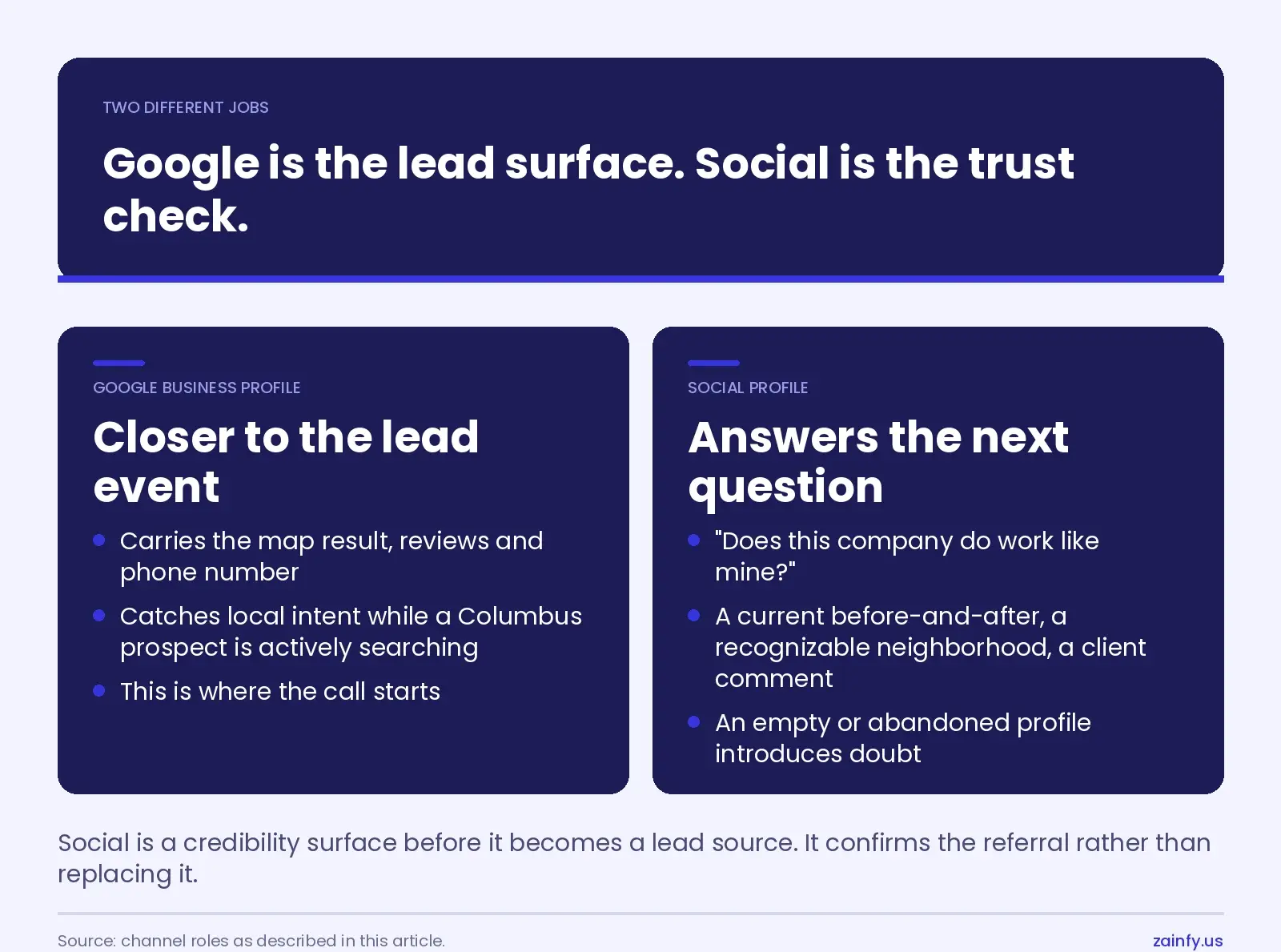
That makes it a credibility surface before it becomes a lead source. A current before-and-after, a recognizable neighborhood, and a client comment can confirm the referral. An empty or abandoned profile introduces doubt.
One Columbus segment changes the calculation further: households arriving around Fort Benning without an established local network.
The Columbus market where “just referrals” stops working
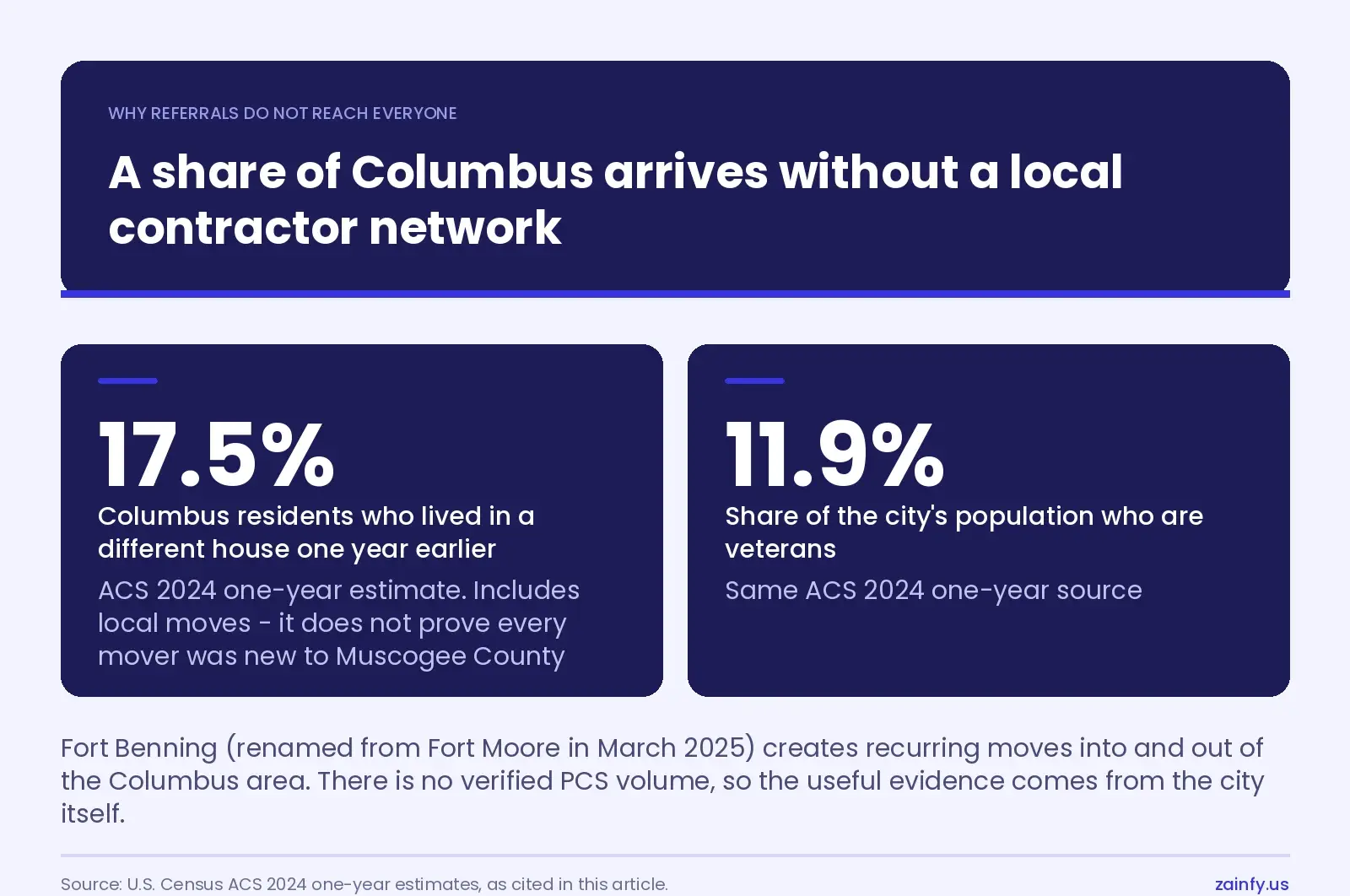
Fort Benning (renamed from Fort Moore in March 2025) creates recurring moves into and out of the Columbus area. There is no verified PCS volume, so the useful evidence comes from the city itself.
U.S. Census ACS 2024 one-year estimates show that 17.5% of Columbus residents lived in a different house one year earlier. That includes local moves and does not prove every mover was new to Muscogee County. That source reports that veterans make up 11.9% of the city’s population.
For the household that has just arrived, “ask a neighbor” may not be available yet. The buyer searches Google, checks reviews, then opens Facebook or Instagram to see whether the contractor’s work looks current and local. Referrals still matter, but they cannot reach a prospect who has nobody nearby to ask.
That is where social does more than decorate the brand. It supplies the project proof that a cold Columbus prospect needs before making contact.
When social media is honestly not worth the time
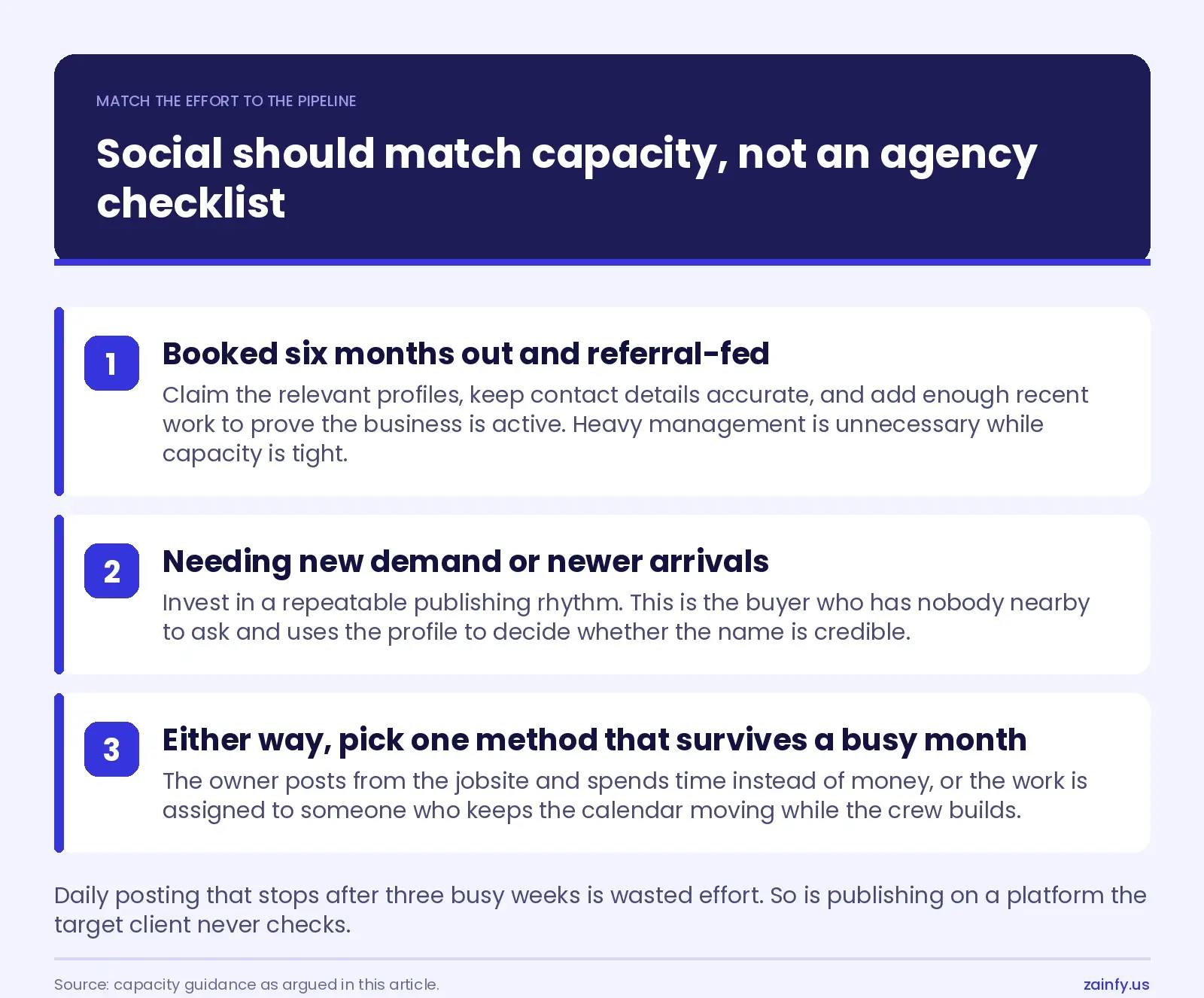
Do not launch four profiles and promise daily posts because an agency said every contractor must be everywhere.
Heavy social management is unnecessary when the company is booked six months ahead, cannot accept more work, and serves established North Columbus or Muscogee County neighborhoods through direct referrals. In that position, the goal is simpler: claim the relevant profiles, keep the contact details accurate, and add enough recent work to prove the business is active.
Daily posting that stops after three busy weeks is wasted effort. So is publishing on a platform the target client never checks. A quiet, current profile with real projects is more credible than a burst of filler followed by silence. A Georgia studio that kept a steady rhythm is the version of this that worked.
Social should match capacity. If the pipeline is full, maintain proof. When the company needs new demand or wants access to newer arrivals, invest in a repeatable publishing rhythm. That rhythm is the same one behind social for remodelers across Georgia.
Social is the trust check; Google is the lead surface
Google Business Profile is usually closer to the lead event. It carries the map result, reviews, phone number, and local intent when a Columbus prospect is actively searching.
Social answers the next question: “Does this company do work like mine?”
Facebook fits the settled homeowner who follows neighborhood groups, community recommendations, and local project updates. Instagram is stronger for visual comparison, especially for a newer arrival scrolling kitchen reveals, exterior transformations, or short jobsite videos. Both can work, but two platforms run well beat four neglected accounts.
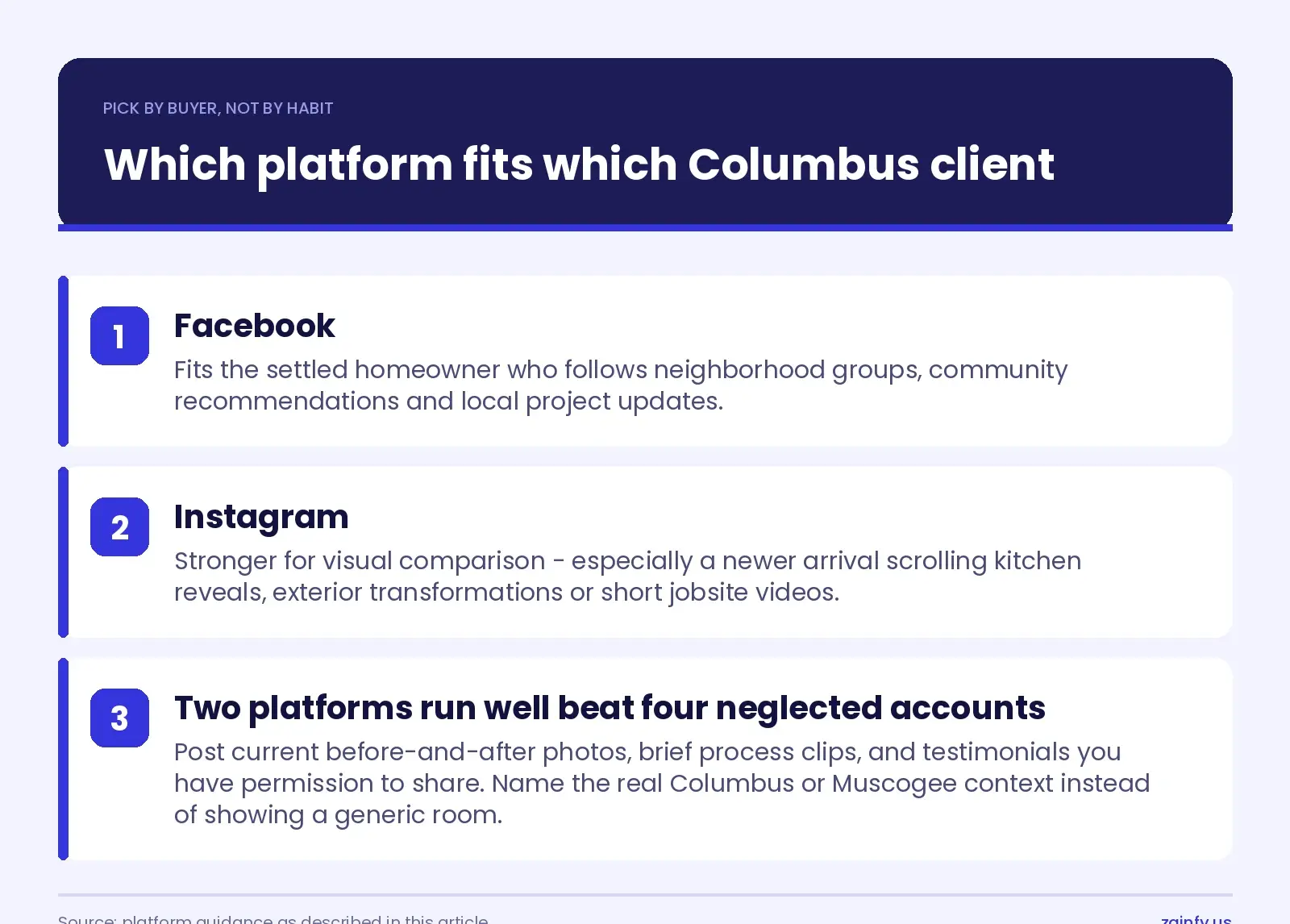
The content is straightforward: current before-and-after photos, brief process clips, and client testimonials the company has permission to share. Each post should name the real Columbus or Muscogee context rather than presenting a generic room.
That is the role behind Columbus remodeler social media management: build a reliable body of local proof that supports the search and referral channels already producing attention.
The real cost is your Saturday
The expense that breaks contractor social is usually the owner’s time. Someone has to photograph the work, choose the useful frames, write a clear caption, publish consistently, and answer messages after a full jobsite day. Most feeds stall when project work gets busy, which is exactly when a prospective client may check whether the company is still active. There are two honest operating choices. The owner can post from the jobsite, spending time instead of money, or assign the work to someone who can keep the calendar moving while the crew builds. Pick one method that survives a busy month. Half-committing is the version that wastes resources because it produces neither a dependable profile nor usable reporting.
Columbus remodeler questions, answered
[wps_faq style=”classic” question=”Does a Columbus, GA remodeler need social media if all leads come from referrals?”]It depends on which Columbus buyer the company wants next. Referrals can sustain a full pipeline in established Muscogee County neighborhoods, so heavy publishing may add little while capacity is tight. The gap appears with a household arriving around Fort Benning that has no local contractor network. That prospect may find the company through Google and use social content to decide whether the name is credible. Keep the profile current even when referrals supply the calls. It protects the introduction when the person receiving the referral has never heard of the business.[/wps_faq]
[wps_faq style=”classic” question=”Should a Columbus contractor start with Facebook or Instagram?”]Start with Facebook when the target is a settled local homeowner following neighborhood groups and recommendations. Start with Instagram when visual project proof matters most, particularly for newer Columbus arrivals comparing kitchens, additions, or exterior work. Do not start both unless the company can supply enough material to keep both current. One channel with recent Muscogee County projects and a working response routine is more useful than two thin feeds. Choose based on the buyer, then use the same real jobsite material in a format that suits that channel. Wherever that attention starts, it has to land on a site built for buyers on a PCS clock.[/wps_faq]
[wps_faq style=”classic” question=”How often should a contractor post for social media to be worthwhile?”]Post as often as the company can sustain through a busy month. A dependable weekly project update is stronger than daily posts for ten days followed by a silent quarter. Use a simple content calendar tied to active Columbus jobs: one before-and-after, one process detail, or one approved testimonial when the material exists. The exact count matters less than freshness and proof. If the owner cannot maintain that rhythm, assign the work or reduce the platform count. Consistency should fit the operation instead of becoming another promise the crew cannot keep.
This week, choose one platform and publish one current Columbus project with the neighborhood, scope, and next step stated plainly. The profile does not need to look busy. It needs to prove the business is.[/wps_faq]